Your phone buzzes. You open the text, and there it is at the end: “JP.” No context, no explanation, just those two letters staring back at you. Now you’re stuck wondering if you’re missing something everyone else already knows.
Here’s the good news — you’re definitely not alone in this.
JP almost always means “just playing.” It’s how people soften a joke, a tease, or a comment that wasn’t meant to be taken seriously. Someone sends something a little sharp or sarcastic, then tacks on “jp” right after, basically saying: relax, I was kidding.
Below, you’ll find exactly how people use JP in real conversations, when it actually makes sense to use it yourself, and a few other meanings it can carry depending on where you spot it.
What Does JP Mean in Text?
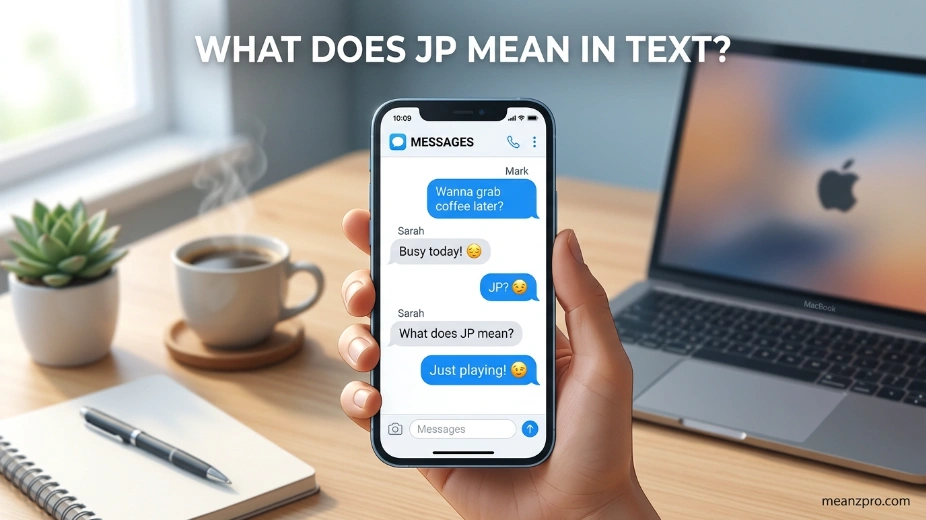
In everyday texting, JP usually means “just playing.” It’s a quick way to tell someone that a previous message wasn’t serious and should be taken as a joke.
For example, someone might tease a friend by saying:
“I’m never talking to you again. JP 😂”
The abbreviation immediately changes the tone, letting the other person know the comment was playful rather than genuine.
Since short messages often lack facial expressions and voice tone, people use messaging shorthand like JP to prevent jokes from being misunderstood.
What Does JP Stand For?
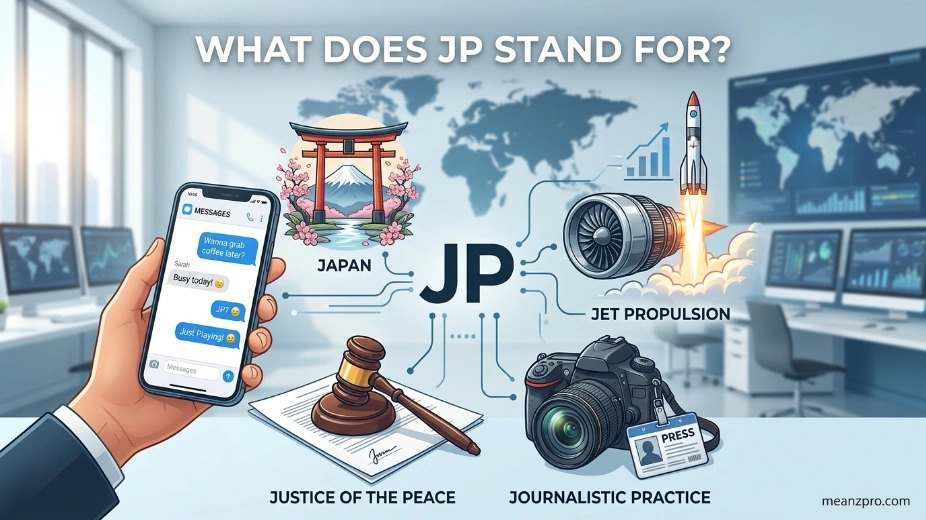
The letters JP stand for:
- J = Just
- P = Playing
Together, they mean “just playing,” which is another way of saying:
- Just kidding
- I was joking
- I didn’t mean that seriously
People shorten the phrase because it’s faster to type, especially during quick conversations on phones and social media. Like many chat acronyms, it keeps conversations moving without requiring a longer explanation.
Quick Answer
What does JP mean?
JP most commonly means “just playing.” People use it on TikTok, Snapchat, Instagram, WhatsApp, and in text messages to let others know that a previous comment was meant as a joke rather than a serious statement.
Key Takeaways
- JP is a text slang abbreviation commonly used in online conversations.
- It is generally not considered offensive when used in a normal conversation.
- It is most popular among Gen Z, Millennials, gamers, and frequent social media users.
- Its meaning depends on the conversation, although “just playing” is the meaning most people intend in casual messaging.
Why Do People Use JP?
People use JP because it makes casual conversations smoother and easier to understand.
Instead of typing an entire sentence explaining they were joking, they can simply add JP after a playful comment.
Common reasons people use it include:
- Saving time while texting.
- Making jokes feel lighter.
- Preventing misunderstandings after teasing someone.
- Matching the fast pace of digital communication on social media.
Its simplicity has made it a familiar part of modern social media language, especially among younger users who send short messages throughout the day.
Where People Use JP
TikTok
On TikTok, JP often appears in comments after playful teasing or exaggerated opinions.
Example:
“Worst video I’ve seen today… JP 😂”
Context: The commenter adds JP so viewers know the criticism is meant humorously.
Snapchat
On Snapchat, friends commonly use JP in quick chats after playful messages.
Example:
A: “I’m deleting you.”
B: “😳”
A: “JP lol”
Context: The abbreviation immediately reassures the friend that the message was only a joke.
In Instagram DMs, JP helps keep friendly conversations lighthearted.
Example:
“Don’t forget you owe me lunch. JP… unless? 😄”
Context: It softens a playful request without making it sound demanding.
People often use JP in family or group chats when making harmless jokes.
Example:
“Looks like you’re buying dinner tonight. JP.”
Context: It signals that the message is playful and isn’t an actual expectation.
SMS
Traditional text messages still use JP, especially between close friends who joke around frequently.
Example:
A: “I finished the whole pizza.”
B: “Seriously?”
A: “JP—I saved you two slices.”
Context: The abbreviation clears up the joke before the conversation becomes confusing.
Real Chat Examples
Here are some natural examples showing how JP is used in different kinds of conversations.
1. Text Message
A: You forgot my birthday.
B: Wait, seriously?
A: JP! I know it’s next week.
2. TikTok Comments
A: This dance is impossible. JP, I might actually try it later.
3. Snapchat Chat
A: You’re officially uninvited.
B: What did I do?
A: JP 😂 You’re still coming.
4. Instagram DM
A: I can’t believe you posted that picture. JP, it’s actually awesome.
5. Gaming Chat
A: Nice move… if you were trying to lose. JP 😄
6. Friend-to-Friend Text
A: I already ate without you.
B: Wow.
A: JP—we’re eating together tonight.
7. Group Chat
A: Meeting starts at 6 a.m. tomorrow. JP, it’s still 9.
8. School Chat
A: The teacher assigned 50 pages of homework.
B: No way!
A: JP, it’s only five.
9. Family Text
A: Mom said we’re moving next month. JP—just wanted to see your reaction.
10. Gaming Voice Chat
A: I’m kicking you from the team. JP, we need you for the next match.
11. Instagram Story Reply
A: Worst vacation photos ever. JP—they actually look amazing.
How to Reply When Someone Says “JP
Casual Replies
- “😂 You almost got me.”
- “Nice one!”
- “I believed you for a second.”
- “Good joke!”
- “That’s funny.”
Friendly Replies
- “Haha, you always fool me.”
- “I should’ve known you were kidding.”
- “You’re getting better at these jokes.”
- “That was actually pretty clever.”
- “Keep the jokes coming!”
Is JP Rude or Offensive?
In most situations, JP is not rude or offensive. It’s simply a friendly way to let someone know a previous message was meant as a joke.
That said, whether it’s appropriate depends on the joke itself. If someone makes a hurtful or insulting comment and then adds “JP,” it doesn’t automatically erase the impact. Humor works best when everyone involved finds it funny.
For school, chatting with friends, or casual online conversations, JP is generally acceptable. In professional emails, workplace messaging, or formal communication, it’s usually better to avoid texting abbreviations and write your message clearly instead.
Who Uses This Term?
JP is most common among Gen Z and Millennials, who regularly use text slang and social media abbreviations in everyday conversations.
You’ll also see it in gaming communities, group chats, and among people who spend a lot of time on platforms where quick, informal messaging is the norm. Although older adults may recognize it, younger internet users tend to use it more frequently.
Origin of the Term
The exact origin of JP isn’t well documented, but it likely developed alongside the growth of SMS texting in the late 1990s and early 2000s. During that time, people shortened common phrases to save time and fit within strict character limits.
As instant messaging, online forums, and later social media became more popular, abbreviations like JP spread naturally. Today, it remains part of everyday internet slang because it’s short, easy to remember, and quickly communicates that a message was meant in a playful way.
Other Meanings of JP
Although “just playing” is the meaning most people intend in casual texting, JP can have different meanings in other situations.
For example, it may refer to a person’s initials, represent Japan in travel or business discussions, or appear as an abbreviation in company names, sports, education, or technical fields. The surrounding conversation usually makes the intended meaning clear.
Common Mistakes People Make About JP
- Assuming JP always has the same meaning, regardless of the conversation.
- Confusing JP with JK (“just kidding”), even though they’re different abbreviations with similar purposes.
- Thinking it’s only used on one social media platform, when it appears across many messaging apps.
- Believing every use of JP refers to “Japan,” even when it’s clearly being used as texting shorthand.
Related Internet Slang Comparison
| Term | Meaning | Type | Common Use |
|---|---|---|---|
| JP | Just Playing | Text slang | Showing a previous message was a joke |
| IDK | I Don’t Know | Chat acronym | Expressing uncertainty |
| IDC | I Don’t Care | Text abbreviation | Showing indifference |
| IMO | In My Opinion | Internet abbreviation | Sharing a personal viewpoint |
| TBH | To Be Honest | Chat acronym | Giving an honest opinion |
| NGL | Not Gonna Lie | Internet slang | Introducing a truthful statement |
| FR | For Real | Text slang | Showing seriousness or agreement |
| SMH | Shaking My Head | Social media abbreviation | Reacting to disappointment or disbelief |
| BRB | Be Right Back | Messaging shorthand | Letting someone know you’ll return soon |
Unlike most of these abbreviations, JP changes the tone of a message rather than adding information. Instead of expressing an opinion, emotion, or action, it tells the reader that the previous statement was intended as playful humor.
Why This Slang Remains Popular
JP has stayed popular because it fits the way people communicate online today. Quick messages, mobile keyboards, and fast-moving conversations encourage shorter expressions that still carry clear meaning. Instead of typing a full sentence to explain a joke, users can add two letters and instantly change the tone. As texting, social media, and online messaging continue to favor speed and convenience, simple abbreviations like JP remain part of everyday digital communication.
Frequently Asked Questions
Does JP always mean “just playing”?
Not always. In texting, it usually means “just playing,” but the same letters can stand for something else depending on the conversation or context.
Is JP the same as JK?
They’re very similar, but not identical. JK means “just kidding,” while JP means “just playing.” Most people use both to show they were joking.
Can I use JP in professional emails?
It’s better to avoid it. In work emails or other formal writing, spelling out what you mean is clearer and more professional.
Why do people put JP at the end of a sentence?
Adding JP at the end lets the other person know the comment was meant as a joke. It’s a quick way to avoid misunderstandings without sending another message.
Is JP used only by teenagers?
No. While it’s especially popular with younger people, plenty of adults use it in casual texts, group chats, gaming, and on social media.
Can JP be misunderstood?
Definitely. If someone isn’t familiar with texting slang, they might not know what it means. When in doubt, writing “just playing” can make your message much clearer.
Is JP still popular in 2026?
Yes. Even though new slang shows up all the time, JP is still common in text messages, social media, gaming chats, and other casual online conversations because it’s short and easy to understand.
Conclusion
JP usually means “just playing,” making it a simple way to show that a message was meant as a joke. You’ll see it across text messages, TikTok, Snapchat, Instagram, WhatsApp, gaming chats, and other casual conversations.
It’s a friendly abbreviation that works well with people who understand internet slang, while complete phrases are still the better choice in formal settings. Once you recognize JP, spotting the playful tone behind a message becomes much easier.
Discover More Post
What Does LMSS Mean in Text? Simple Meaning & Real Examples 2026
What Does Re Mean in Text? Simple Meaning and Examples 2026
What Does HY Mean in Text? 2 Common Meanings Explained 2026

Lorie is a dedicated language content specialist and contributor at MeanzPro, passionate about making English simple and accessible for everyone. With over 5 years of experience in content writing, she specializes in internet slang, grammar, vocabulary, text abbreviations, and word meanings. Her articles combine thorough research with clear, reader-friendly explanations, helping learners confidently understand modern English and everyday digital communication. At MeanzPro, Lorie is committed to publishing accurate, engaging, and SEO-optimized content that educates readers while keeping pace with the ever-evolving language of the internet.