Your friend sends you a text with 😭, and now you’re stuck staring at your phone trying to figure out what they actually meant. Are they upset? Laughing so hard tears are rolling down? Or just having one of those emotional moments?
Honestly, this little emoji does a lot of heavy lifting. Depending on who’s texting and what they’re replying to, it might mean pure sadness one minute and “I can’t stop laughing” the next. Some people even use it to say thank you or show how relieved they feel. Once you get a feel for the conversation around it, the meaning usually clicks pretty fast—whether it’s a text from a friend or something you scrolled past on Instagram.
What Does Crying Emoji Mean in Text?
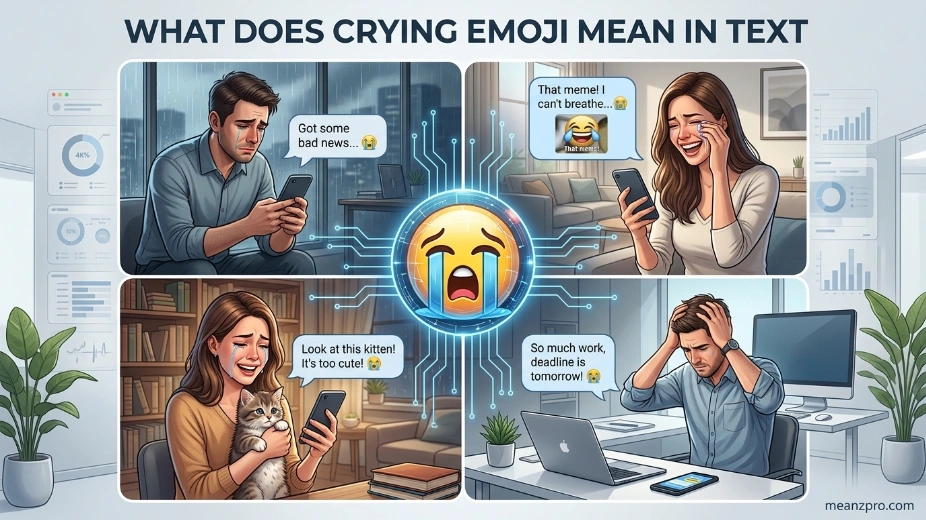
In texting, the crying emoji is used to show that someone is feeling emotional. Most often, it represents sadness, disappointment, sympathy, or being touched by something meaningful. Instead of typing a long explanation, people can send a single emoji to express how they feel.
The exact meaning depends on which crying emoji is being used. For example, the 😢 Crying Face usually shows sadness or regret, while the 😭 Loudly Crying Face often expresses overwhelming emotions. In many online conversations, people even use 😭 to react to something so funny that they feel like they’re “crying” with laughter.
Because emojis don’t have fixed definitions, readers usually understand them by looking at the surrounding message rather than the emoji alone.
What Does Crying Emoji Stand For?
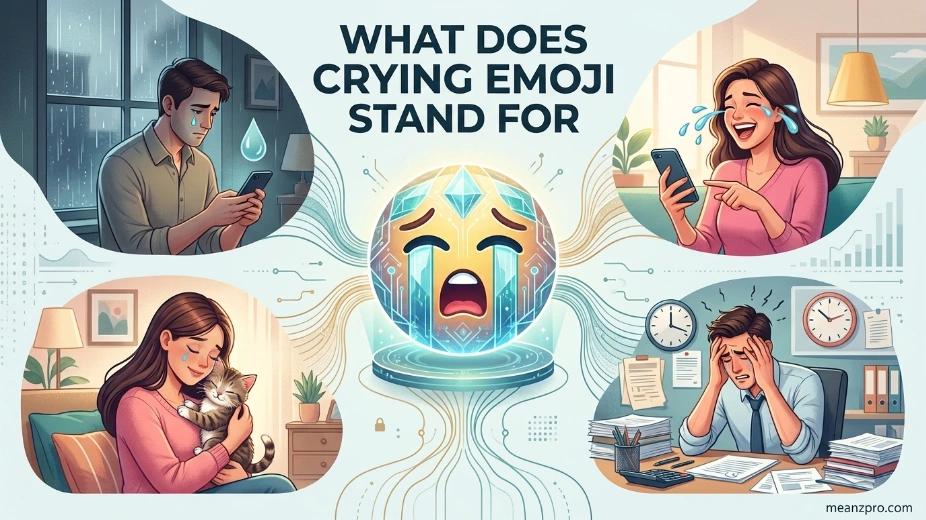
Unlike internet terms such as “IDK” or “BRB,” the crying emoji does not stand for any words or phrase. It is simply a visual symbol designed to represent tears and emotional expression.
Each version of the crying emoji communicates emotion through facial expressions:
- 😢 Crying Face shows a single tear, suggesting sadness, disappointment, or sympathy.
- 😭 Loudly Crying Face shows streams of tears, representing much stronger emotions such as heartbreak, relief, excitement, or laughing so hard that someone “cries.”
People use these emojis because pictures often communicate feelings more naturally than words in online messaging.
Quick Answer
What does crying emoji mean?
The crying emoji means someone is expressing strong emotions, most often sadness, being deeply moved, or reacting emotionally to something. People commonly use it on TikTok, Snapchat, Instagram, WhatsApp, and text messages to show genuine feelings or emphasize an emotional response.
Key Takeaways
- The crying emoji is an emoji, not a slang word, acronym, or abbreviation.
- It is generally not considered rude or offensive.
- It’s especially popular among Gen Z, Millennials, and active social media users.
- Its meaning often depends on the tone of the conversation and the message around it.
Why Do People Use Crying Emoji?
The crying emoji has become one of the easiest ways to add emotion to a message without writing a long explanation.
People use it because it:
- Quickly shows how strongly they feel.
- Makes text messages sound warmer and more expressive.
- Helps reactions feel more personal during online conversations.
- Fits naturally into fast-paced chats where typing long responses isn’t necessary.
- Lets users react instantly to emotional, surprising, or unforgettable moments.
For many younger users, emojis have become part of everyday digital communication, making conversations feel closer to face-to-face interactions.
Where People Use Crying Emoji
TikTok
On TikTok, the crying emoji often appears in comments reacting to emotional videos or hilarious clips.
Example:
“This ending made me cry 😭”
The emoji highlights a strong reaction to the video’s ending.
Snapchat
On Snapchat, friends frequently use the crying emoji when responding to disappearing photos or quick updates.
Example:
“You really forgot my birthday 😢”
Here, it adds emotion without making the message feel overly serious.
On Instagram, people use the crying emoji in comments and direct messages after seeing touching photos, memorable moments, or funny Reels.
Example:
“Your graduation pictures are beautiful 😭❤️”
The emoji emphasizes how meaningful the photos feel.
On WhatsApp, family members and close friends often use the crying emoji during personal conversations.
Example:
“I already miss everyone 😢”
It expresses genuine emotion during a private chat.
SMS
In regular text messages, the crying emoji helps make short replies feel more expressive.
Example:
“I can’t believe the concert got canceled 😭”
Real Chat Examples
Here are some natural examples showing how people use the crying emoji in different conversations.
1. Texting Friends
A: I can’t believe our vacation is over. 😢
B: I know. I already miss the beach.
2. TikTok Comments
A: This dog finally found a forever home. 😭
B: Best video I’ve watched all day.
3. Snapchat Chat
A: You seriously ate the last slice of pizza? 😭
B: I was hungry! I’ll buy another one.
4. Instagram DM
A: Your engagement photos are gorgeous. 😭❤️
B: Thank you! We’re so excited.
5. Gaming Chat
A: We lost in the final round. 😭
B: Next match is ours.
6. Family Group Chat
A: Grandma’s old recipe turned out perfectly. 😭
B: She would have loved seeing that.
7. School Friends
A: I forgot there’s a math test today. 😭
B: Same here. I barely studied.
8. Funny Text Conversation
A: I just tripped in front of everyone. 😭
B: Please tell me someone got it on video.
9. Concert Chat
A: They played my favorite song live. 😭
B: That must’ve been unforgettable.
10. Sports Group Chat
A: Our team won in overtime! 😭
B: What an incredible finish.
11. Work Friends
A: They finally approved my vacation. 😭
B: You definitely earned it.
How to Reply When Someone Says “Crying Emoji”
Casual Replies
- “I know, right? 😭”
- “That was unbelievable.”
- “Same here!”
- “I felt the exact same way.”
- “I can’t stop thinking about it either.”
Friendly Replies
- “Hope everything gets better soon. ❤️”
- “I’m here if you want to talk.”
- “Sending you a big hug.”
- “You don’t have to go through it alone.”
- “Take your time—you’ll get through this.”
Is Crying Emoji Rude or Offensive?
The crying emoji is generally considered polite and harmless. Most people use it to express emotion rather than to insult or offend someone.
Whether it’s appropriate depends on the situation. It’s perfectly normal in personal texts, social media language, and casual online messaging. In professional emails, workplace chats, or formal school communication, it’s usually better to rely on clear words instead of emojis unless you already know that the conversation has an informal tone.
Who Uses This Term?
The crying emoji is popular across many age groups, but it’s especially common among Gen Z and Millennials, who often rely on emojis as part of everyday text slang.
You’ll also see it frequently in gaming communities, group chats, and social media platforms where quick emotional reactions are part of normal digital communication. Even older users use it regularly, although they may stick more closely to its traditional meaning of sadness than younger users do.
Origin of the Term
The crying emoji originated as part of the Unicode emoji standard, which allows emojis to appear across different phones, computers, and apps. As smartphones became more common, emojis gradually replaced many written emotional expressions in text messages.
Over time, internet culture expanded the meaning of the louder crying emoji (😭). While it originally represented intense sadness, social media users began using it to react to hilarious jokes, heartwarming stories, shocking moments, and overwhelming excitement. That shift happened naturally through everyday online use rather than from any official change, so there isn’t one exact moment when its modern meaning began.
Other Meanings of Crying Emoji
The crying emoji doesn’t have an official alternate definition like many chat acronyms do. Instead, its interpretation changes based on the situation.
For example, someone might use it to show sadness, relief after good news, gratitude, emotional appreciation, or laughing so hard that they “can’t stop crying.” The surrounding message usually makes the intended meaning clear.
Common Mistakes People Make About Crying Emoji
- Assuming every crying emoji always means someone is upset, even when it’s expressing laughter or excitement.
- Thinking all crying emojis have the same intensity, even though 😢 and 😭 usually convey different levels of emotion.
- Ignoring the rest of the message instead of reading the emoji in context.
- Believing emojis have one fixed definition when their meaning often evolves with online culture.
Related Internet Slang Comparison
| Term | Meaning | Type | Common Use |
|---|---|---|---|
| Crying Emoji (😢/😭) | Expresses strong emotions such as sadness, being moved, or laughing so hard you’re “crying” | Emoji | Emotional reactions in chats and social media |
| IDK | I Don’t Know | Chat acronym | Answering questions when unsure |
| IDC | I Don’t Care | Chat acronym | Showing indifference |
| IMO | In My Opinion | Internet slang | Sharing a personal viewpoint |
| TBH | To Be Honest | Internet slang | Giving an honest opinion |
| NGL | Not Gonna Lie | Internet slang | Introducing a truthful statement |
| FR | For Real | Texting abbreviation | Showing agreement or seriousness |
| SMH | Shaking My Head | Internet slang | Reacting to disappointment or disbelief |
| BRB | Be Right Back | Messaging shorthand | Letting someone know you’ll return soon |
Unlike these text-based abbreviations, the crying emoji doesn’t replace words or initials. Instead, it adds emotion to a message, making conversations feel more expressive without needing extra text.
Why This Slang Remains Popular
The crying emoji continues to be one of the most-used symbols because it communicates feelings instantly. A single emoji can often express more emotion than a full sentence, making conversations faster and easier on mobile devices.
Its popularity has also grown with social media habits, where quick reactions are part of everyday communication. Whether someone is responding to a funny meme, an emotional story, or surprising news, the crying emoji fits naturally into modern online conversations across different platforms.
Frequently Asked Questions
Does the crying emoji always mean someone is sad?
Not at all. While it often shows sadness, people also use it when they’re laughing, feeling grateful, relieved, or emotionally overwhelmed.
What’s the difference between 😢 and 😭?
😢 usually expresses lighter sadness or sympathy. 😭 is much more dramatic and can show deep emotion, excitement, or laughing so hard you’re “crying.”
Can I use the crying emoji with people I don’t know well?
You can, but it works best when the conversation already feels casual. If you’re talking to someone new, make sure the emoji fits the tone of the chat.
Why do people use the crying emoji when something is funny?
On social media and in text messages, many people use it to mean they’re laughing so hard they could cry. It’s become a common way to react to something that’s genuinely hilarious.
Does the crying emoji look the same on every phone?
No. The design changes a little between Apple, Google, Samsung, and other platforms, but the meaning is generally the same.
Can brands use the crying emoji on social media?
Yes, as long as it fits their voice and audience. Many brands use it in casual posts and replies to sound more approachable and relatable.
Is the crying emoji becoming more popular?
Yes. It’s still one of the most widely used emojis because it works in so many different situations, from emotional moments to funny conversations.
Conclusion
The crying emoji is a simple way to express strong emotions in digital conversations. Depending on the situation, it can represent sadness, heartfelt appreciation, overwhelming excitement, or even laughing until you cry.
You’ll see it every day on TikTok, Snapchat, Instagram, WhatsApp, and in regular text messages. Once you recognize how people use it in different situations, it’s much easier to understand the feeling behind the message and respond naturally.
Discover More Post
What Does HY Mean in Text? 2 Common Meanings Explained 2026
What Does JP Mean in a Text? Meaning Examples & When to Use It 2026
What Does Re Mean in Text? Simple Meaning and Examples 2026

Dexie is a professional content writer and language researcher with 8+ years of experience in English language, internet slang, texting abbreviations, grammar, and SEO content writing.
As the lead author at MeanzPro, Dexie creates well-researched, easy-to-understand content that helps readers learn modern English, social media slang, and everyday communication. Every article is written with accuracy, clarity, and Google’s Helpful Content guidelines in mind.